Insider tips for cleaning delicate upholstery at home
Delicate upholstery looks beautiful right up until the first tea spill, muddy handprint, or mystery mark appears. Then the panic starts. Can you clean it yourself without damaging the fabric, flattening the pile, or leaving a water ring that seems to say, well, that was a mistake? The short answer is yes - if you go slowly, choose the right method, and understand what the fabric actually needs. These insider tips for cleaning delicate upholstery at home will help you tackle silk blends, velvet, linen, chenille, wool-rich fabrics, and other fussy materials with far less stress and a lot more confidence.
In this guide, you will learn how delicate upholstery behaves, how to test cleaning methods safely, which products and tools are worth using, and what to avoid if you want your sofa or chair to stay looking elegant rather than vaguely tragic. We will also cover when to stop and call in help, because to be fair, some stains and fabrics do not play nicely with DIY cleaning.
Table of Contents
- Why delicate upholstery cleaning matters
- How gentle upholstery cleaning works
- Key benefits and practical advantages
- Who this is for and when it makes sense
- Step-by-step guidance
- Expert tips for better results
- Common mistakes to avoid
- Tools, resources and recommendations
- Law, compliance, standards and best practice
- Options, methods and comparison table
- Case study or real-world example
- Practical checklist
- Conclusion
- Frequently asked questions
Why delicate upholstery cleaning matters
Delicate upholstery is not just another soft furnishing. It can be woven from fibres that react badly to heat, friction, excess moisture, strong chemicals, or even the wrong brush. Once the finish is disturbed, you may see shading, pilling, shrinkage, colour bleed, or an uneven texture that never quite settles back. That is why cleaning it carefully matters so much.
There is also the practical side. Sofas, armchairs, dining chairs, footstools, and accent pieces often carry the most daily use in a home. They collect skin oils, dust, crumbs, pet dander, and the occasional dramatic spill. If left alone, those marks become harder to lift and the fabric can start to look tired much sooner than it should. A calm, routine approach is usually better than waiting for one catastrophic clean-up day.
In our experience, homeowners often assume delicate means fragile to the point of untouchable. Not quite. Most fabrics can be maintained safely if you treat them with restraint. The real trick is knowing how much intervention is enough. That is the whole game, really.
If you already know your upholstery needs more than a light refresh, it may help to compare notes with a professional upholstery cleaning service or look at broader deep cleaning support for the rest of the room. For some homes, a one-off refresh is all that is needed; for others, it becomes part of a larger care routine.
How gentle upholstery cleaning works
Cleaning delicate upholstery is less about brute force and more about controlled moisture, low agitation, and careful drying. Think of it as tidying the fabric rather than scrubbing it into submission. The process usually has four stages: identify the fabric, remove dry soil, test a safe cleaner, and dry the material evenly.
First, identify the upholstery type and care label. Many pieces use cleaning codes that guide the method:
- W usually means water-based cleaners are acceptable.
- S usually means solvent-based cleaning only.
- WS suggests either water or solvent cleaning may be suitable.
- X means vacuum only; professional cleaning is often the safer option.
Those codes matter more than guesswork. A fabric that looks robust may still react badly to moisture. Velvet, for example, can crush or mark if it is over-wet. Linen can show water spots. Wool blends may shrink or felt if handled too aggressively. The whole point is to work with the fibre, not against it.
Second, dry soil must be removed before any liquid is introduced. Why? Because dust and grit become abrasive once you start rubbing them around. That is how dullness sets in. A soft brush attachment and slow vacuuming do more good than most people expect.
Third, spot test every cleaner. Even a mild solution can change colour, lift dye, or leave a ring. The test should be done on a hidden area and left to dry fully before you judge the result. A patch that looks fine when damp can tell a very different story the next morning.
Finally, drying has to be managed. Damp upholstery left in a closed room can develop odour and attract more grime. Open a window, use gentle airflow, and avoid sitting on the piece until it is properly dry. Simple, but easily skipped.
Key benefits and practical advantages
Cleaning delicate upholstery at home, when done properly, offers some genuine advantages. The first is obvious: it keeps furniture looking fresher for longer. The second is that regular maintenance can prevent the need for more aggressive treatments later. Small marks are easier to lift than old, set-in stains. That is just how it goes.
There is also a cost and convenience angle. A careful DIY clean can stretch the time between professional visits, which is useful if you are maintaining a family sofa, a spare room chair, or a feature piece that only needs light attention. You can also respond quickly to spills instead of waiting for an appointment. A fast response often makes the biggest difference.
Other practical benefits include:
- reducing odours from food, pets, and everyday living;
- removing dust that can make fabrics look flat and dull;
- helping preserve texture and colour;
- supporting a cleaner-feeling room without over-wetting surfaces;
- spotting wear, seams, or loose threads before they worsen.
There is a quiet satisfaction in it too. You look at the chair by the window, notice the fabric has come back to life a bit, and think, yes, that was worth ten calm minutes and not one dramatic panic wipe. Small victory, but still a victory.
For homeowners wanting broader upkeep across the property, pairing upholstery care with regular domestic cleaning or an occasional one-off cleaning schedule can keep the whole home feeling easier to manage.
Who this is for and when it makes sense
This approach suits anyone with furniture made from softer, finer, or more sensitive fabrics. It is especially useful if you have:
- a velvet or faux velvet sofa that marks easily;
- linen or linen-blend chairs that water-spot quickly;
- wool-rich upholstery that needs gentle handling;
- light-coloured furniture that shows everyday marks;
- decorative chairs or benches that are used less often but still gather dust;
- homes with children, pets, or frequent guests.
It also makes sense when the mark is localised and the fabric is in good shape overall. A small coffee splash on one cushion is a very different job from a sofa that smells damp throughout or has multiple old stains layered up over time. One is a careful tidy-up. The other may need a deeper assessment.
This is not always the right job to rush. If the fabric has no care label, the stain is oily and spread widely, or the item is antique or sentimental, pause. Ask yourself: do I want to save the sofa, or do I want to learn an expensive lesson at 9 p.m.? There is no shame in choosing caution.
For larger households or furniture that sees heavy traffic, combining targeted spot care with occasional professional rug cleaning or carpet cleaning can make a real difference to indoor freshness. The fabrics tend to age together, after all.
Step-by-step guidance
Here is a safe, practical method you can follow for most delicate upholstery. Go slowly. Rushing is where mistakes creep in.
1. Check the care label and fabric type
Look underneath cushions, along seams, or on the frame tag. If the label says X, vacuum only is usually the sensible choice. If there is no label, assume the fabric needs extra caution. When in doubt, keep water to a minimum.
2. Vacuum thoroughly
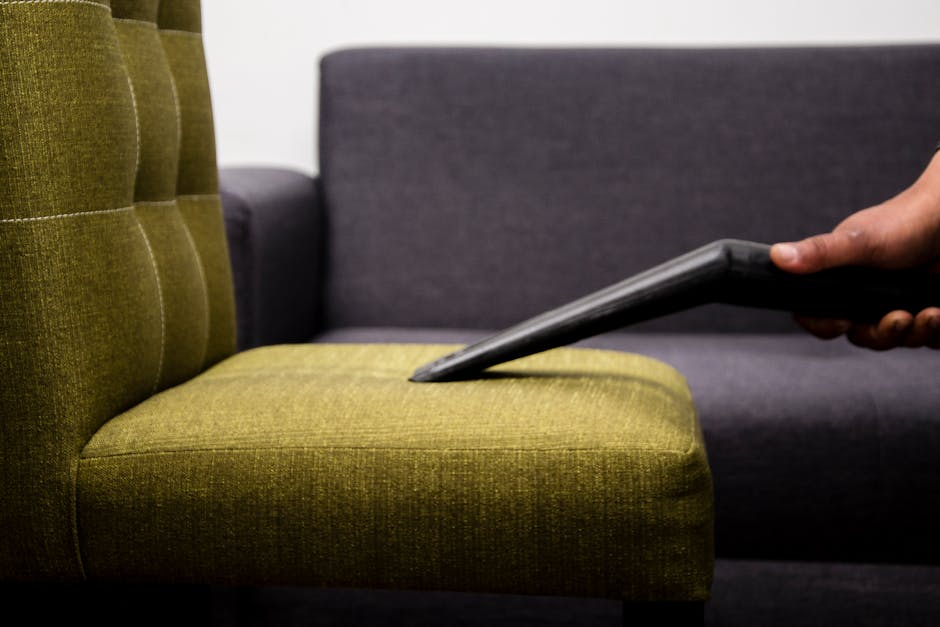
Use a soft brush attachment and remove crumbs, dust, and loose debris. Work gently around seams, tufts, and piping. A surprising amount of grime hides in those little creases. You will probably notice the piece already looks better before any cleaning solution touches it.
3. Prepare the mildest possible cleaning solution
For water-safe fabrics, start with cool or lukewarm water and a tiny amount of mild, fabric-friendly detergent. Less is better. Too much soap leaves residue, and residue attracts dirt. If the fabric is especially delicate, plain water on a cloth may be enough for the first pass.
4. Spot test in an unseen area
Dab a hidden patch and wait for it to dry fully. Look for colour transfer, texture change, ring marks, or stiffness. If anything looks off, stop there. That is your warning sign.
5. Blot, do not scrub
Use a clean white cloth or microfiber cloth to blot the stain lightly. Work from the outside of the mark inward so it does not spread. Scrubbing breaks down fibres and can make the pile look rough. Gentle pressure is the whole point.
6. Use minimal moisture
Moisten the cloth, not the sofa. This is one of the biggest insider tips for cleaning delicate upholstery at home. Too much liquid is a fast route to tide marks, odour, and slow drying. If the cloth drips, it is too wet.
7. Lift the residue with a second damp cloth
Once the stain begins to lift, dab the area with a fresh, slightly damp cloth to remove detergent residue. Again, no soaking. You are aiming for clean, not flooded.
8. Absorb remaining moisture and dry evenly
Press a dry towel into the area, then allow air to circulate. A fan can help. Avoid direct heat, hairdryers, or radiators too close to the fabric, especially on velvet or wool. Uneven heat can distort the pile or leave a crusty finish. Not lovely.
9. Restore the texture if needed
Some fabrics benefit from a soft brush once dry, brushed in the direction of the nap. That helps lift flattened fibres and can return a more uniform appearance. On velvet, use a very light touch. Think grooming, not scrubbing.
That is the method in a nutshell. For many small marks, it really is enough. For older stains or odours, you may need a second round later rather than trying to force the result in one go.
Expert tips for better results
Little habits make a big difference with delicate fabrics. Here are the things that tend to separate a tidy outcome from a slightly annoying one.
- Work in daylight if possible. Evening light makes it harder to spot rings, missed patches, or colour changes. Morning light near a window is ideal.
- Use white cloths. Coloured cloths can transfer dye, especially if they are new or not thoroughly washed.
- Test more than one hidden area. A side seam and a lower rear panel can react differently, oddly enough.
- Keep a second dry towel ready. It sounds obvious, but when a spill happens, people often realise too late that the nearest towel is damp, greasy, or mysteriously missing.
- Treat stain type differently. Water-based marks, oily marks, and protein-based marks do not behave the same way. A food stain may need repeated blotting, while an oil mark often needs a completely different approach.
- Do not over-apply product. A little cleaner and patience usually beats a lot of cleaner and panic.
- Ventilate the room. Open windows where possible. Fresh airflow speeds drying and helps prevent stale smells.
One small insider habit: always clean the surrounding area a little wider than the visible mark. That softens the transition between cleaned and untouched fabric, which helps avoid an obvious patch. You may not notice the difference at first, but your eye absolutely will when it dries.
If you are dealing with a room that needs more than just upholstery attention, it can help to coordinate the clean with window cleaning or hard floor cleaning so the whole space feels genuinely refreshed, not just one piece of furniture.
Common mistakes to avoid
Most upholstery damage happens through overconfidence rather than neglect. Here are the mistakes that cause the most grief.
- Using too much water. This can create water rings, swelling, slow drying, and odour.
- Scrubbing hard. It roughs up fibres, pushes dirt deeper, and can flatten texture.
- Skipping the spot test. A cleaner that looks harmless can still strip dye or mark the fabric.
- Using bleach or harsh stain removers. These are far too aggressive for delicate fabric and can cause permanent discolouration.
- Ignoring the care label. The label exists for a reason, even if the furniture is old and the tag is half hanging off.
- Drying too quickly with direct heat. This may seem helpful, but it can distort delicate fibres and set rings into place.
- Cleaning only the stain and nothing around it. That often leaves a halo.
One more thing people forget: vacuuming after the fabric is wet is a bad idea. Let it dry first. Really dry. Otherwise you are just creating more friction and more mess. A bit obvious, yet it happens all the time.
Tools, resources and recommendations
You do not need a suitcase full of specialist kit to look after delicate upholstery. In fact, too much gear can encourage over-cleaning. A small, sensible set of tools usually works best.
- Soft brush vacuum attachment for removing loose dust and crumbs.
- White microfiber cloths for blotting and residue removal.
- Two clean towels for moisture control and drying support.
- Small bowl or spray bottle for controlled dampening, if the fabric allows it.
- Mild detergent or upholstery-safe cleaner suitable for the fabric code.
- Soft clothes brush for restoring pile on fabrics like velvet or chenille.
- Fan or open-window airflow for even drying.
If your home has several soft furnishings in regular use, it may also be worth reading up on deep cleaning routines for the whole property. Delicate upholstery is easier to maintain when dust and soil are under control elsewhere too. That includes curtains, rugs, and the odd chair that somehow becomes a coat stand.
For households that prefer to keep cleaning more systematic, a seasonal plan can help. Light vacuuming weekly, spot treatment as needed, and a more careful inspection every few months keeps fabric in much better shape than the "wait until it looks bad" approach. That route is, frankly, a bit of a trap.
Law, compliance, standards and best practice
For home cleaning, there is usually no special legal process to follow, but best practice still matters. In the UK, the sensible baseline is to use products safely, follow the manufacturer's instructions, and keep ventilation and storage in mind. If you live in a rental property, it is also worth remembering that damage caused by unsuitable cleaning may become a tenancy issue, especially where stains, shrinkage, or colour changes are visible.
From a practical standpoint, the most reliable standard is the care label and the fabric manufacturer's guidance if you have it. Those instructions should override internet shortcuts, family folklore, and the old "my neighbour swears by it" routine. Delicate fabrics often need conservative handling, not ambitious experiments.
If you use any cleaning chemical at home, keep it out of reach of children and pets, and never mix products unless the label clearly allows it. That sounds basic, but it is one of those areas where basic is exactly what you want.
For people managing furnished lets, end-of-tenancy expectations can be stricter than daily home care, so a cautious approach is wise. If you are preparing a property, support from end of tenancy cleaning may be the safer route for broader results, especially when upholstery, flooring, and general presentation all need to be in shape at once.
Options, methods and comparison table
There is no single best method for every delicate fabric. The right choice depends on the material, the stain, and how confident you are. Here is a simple comparison to help you decide.
| Method | Best for | Pros | Watch-outs |
|---|---|---|---|
| Dry vacuuming only | Very delicate fabrics, code X, routine maintenance | Safest, quick, no moisture risk | Won't remove set stains |
| Light blot cleaning with mild solution | Water-safe fabrics, small fresh marks | Effective for spill response, low cost | Risk of rings if over-wet |
| Foam or minimal-moisture cleaner | Delicate pile fabrics, controlled spot cleaning | Less water exposure, better texture control | Needs careful testing and residue removal |
| Professional upholstery treatment | Sensitive, valuable, or heavily soiled furniture | Usually more consistent, less trial and error | Higher cost, needs scheduling |
If the furniture is particularly valuable or awkwardly stained, professional care may be the most efficient answer. It is not about giving up. It is about choosing the least risky path. There is a lot to be said for that.
Case study or real-world example
A common scenario goes like this: a pale linen-blend footstool picks up a tea mark during a Sunday afternoon visit. It is small, but it stands out like a beacon. The homeowner's first instinct is to use a strong spray and rub hard with kitchen roll. That usually makes the mark spread or leaves a sharper edge.
A gentler response works better. The area is vacuumed first, then lightly blotted with a barely damp white cloth and a tiny amount of mild cleaner on the cloth rather than directly on the fabric. The mark is treated in short passes, each one followed by a dry cloth to lift moisture. The room window is opened, and the footstool is left alone to dry. By the next day, the stain is greatly reduced and the surrounding fabric still looks even.
The important detail is not perfection. It is control. The furniture is cleaner, the fibres are intact, and there is no obvious tide line. Truth be told, that is the difference most people are after.
Now, if the same footstool had been saturated, heavily stained, or made from an unknown vintage fabric, the outcome could have been very different. That is where judgment comes in. Sometimes the best DIY tip is to stop early and reassess.
Practical checklist
Use this quick checklist before you clean delicate upholstery at home:
- Check the care label and identify the fabric code.
- Vacuum the upholstery with a soft attachment.
- Test any cleaner on an unseen patch first.
- Use the mildest product possible.
- Apply cleaner to a cloth, not directly to the fabric, where suitable.
- Blot gently from the outside of the stain inward.
- Lift residue with a clean damp cloth.
- Absorb excess moisture with a dry towel.
- Allow plenty of airflow while drying.
- Brush the pile lightly once the fabric is fully dry, if appropriate.
- Stop if colour changes, stiffness, or rings appear.
If you tick all of those boxes, you have already avoided most of the common disasters. Not a bad place to be.
Conclusion
Cleaning delicate upholstery at home is really about restraint, not heroics. The safest approach is to identify the fabric, remove dry dirt first, test carefully, use very little moisture, and let the piece dry properly. That combination protects texture, colour, and shape while still helping your furniture look cared for and lived-in, not worn out.
The more you treat delicate fabric like something to be supported rather than attacked, the better the results tend to be. And when a stain is too old, too large, or too risky, stepping back is not failure. It is good judgment. Honestly, that is a skill in itself.
Get a free quote today and see how much you can save.
Frequently Asked Questions
What is the safest way to clean delicate upholstery at home?
The safest method is to vacuum first, spot test a mild cleaner, blot gently with minimal moisture, and allow the fabric to dry fully with good airflow. For code X fabrics, vacuuming only is usually the safest choice.
Can I use a steam cleaner on delicate upholstery?
Usually not without checking the care label first. Steam can be too much for velvet, linen, wool blends, and other sensitive fabrics. Heat and moisture together can cause shrinkage, marks, or texture changes.
How do I remove a fresh spill without damaging the fabric?
Blot the spill immediately with a clean white cloth. Do not rub. Then use the smallest amount of fabric-appropriate cleaner on a cloth and continue blotting until the mark lifts. Finish by drying the area evenly.
Why does my upholstery get water rings after cleaning?
Water rings usually appear when too much liquid is used or when the cleaned area dries unevenly. To reduce that risk, use less moisture, work from the outside of the mark inward, and dry the fabric with airflow rather than heat.
What fabrics are most delicate?
Velvet, linen, wool-rich blends, silk blends, and some textured or antique fabrics are often the most sensitive. That does not mean they cannot be cleaned, but they do need a lighter touch and careful testing.
Should I use vinegar on delicate upholstery?
Not as a default. Vinegar can affect dyes, finishes, and fibre texture on some fabrics. If you are unsure, it is better to use a mild upholstery-safe cleaner or simply a lightly damp cloth after testing first.
How often should delicate upholstery be cleaned?
Light vacuuming can be done weekly or as needed, depending on use. Spot cleaning should happen as soon as spills occur. A more careful refresh every few months is usually enough for many homes, though high-use pieces may need attention sooner.
Can I clean delicate upholstery if I do not know the fabric type?
Yes, but only cautiously. Start with vacuuming and avoid wet cleaning until you are confident it can handle moisture. If there is no care label and the fabric looks especially sensitive, it may be safer to seek professional help.
What should I do if the stain gets worse after I clean it?
Stop cleaning straight away. Do not keep adding more product. Let the fabric dry fully, then reassess. If there is spreading, discolouration, or stiffness, further DIY cleaning may do more harm than good.
Is professional upholstery cleaning better than doing it myself?
Not always, but it is often better for valuable, heavily soiled, or highly delicate items. DIY works well for fresh spills and light maintenance. Professional cleaning is usually the wiser option when the risk of damage is high or the stain is stubborn.
How do I keep delicate upholstery looking good between cleans?
Vacuum gently, address spills quickly, rotate cushions where possible, keep food and drinks away from the sofa when you can, and avoid direct sunlight if the fabric fades easily. Small habits make a bigger difference than people expect.
Can delicate upholstery cleaning help with odours?
Yes, if the odour is caused by surface dirt or minor spill residue. Fresh airflow, gentle vacuuming, and careful spot cleaning can improve the smell. If the odour is deep-set, damp, or pet-related, a more thorough treatment may be needed.